
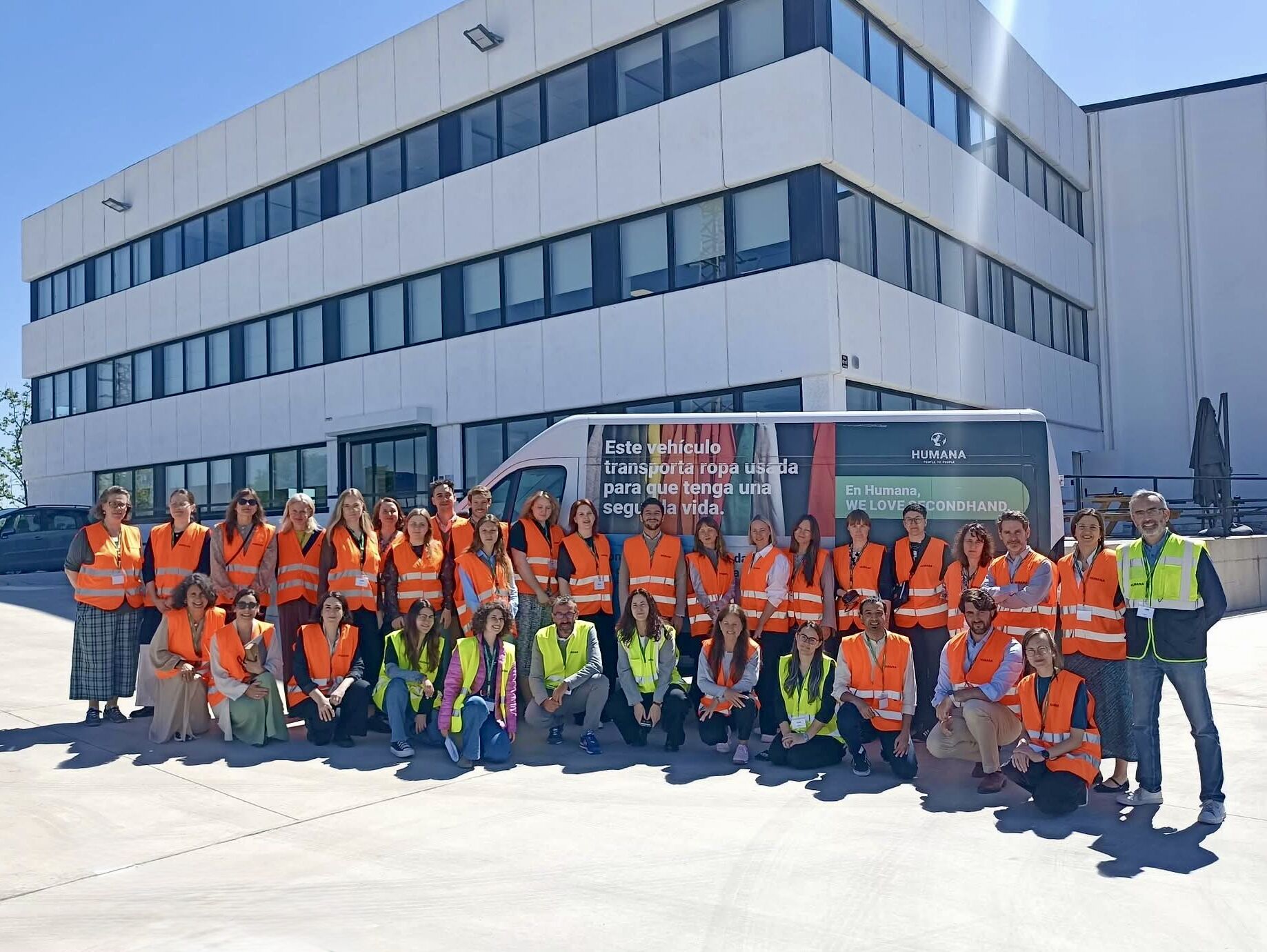
Last week, the TexMat consortium gathered in Madrid to review progress from the project’s first six months and take the next steps in developing a deposit-return system for used clothing in Europe.
Bringing together 14 partners from across the textile value chain, the meeting focused on turning shared ambition into practical solutions that can support textile circularity at scale.
Key topics this week included:
Digital Product Passport (DPP) integration into garments to improve traceability and material information.
Data flows and AI-powered tools that can support textile sorting by assessing garment condition and “ageing” after use.
User experience and incentives, including reward models that encourage participation in the TexMat system.
Our host, Humana Spain, welcomed the consortium for a behind-the-scenes look at the collection and sorting of post-consumer textiles.
In 2025, 61% of garments sorted by Humana Spain were prepared for reuse. Of these, 21% found a new owner in Europe — including Spain, Portugal, and France — while the remainder were exported to markets in Malawi, Mozambique, Angola, Zambia, and Guinea-Bissau.
For Humana Spain, textile reuse is not only aligned with the EU waste hierarchy, where reuse is prioritised — it is also essential for operational sustainability, as revenue from resale helps fund important social and environmental work.
This underlines another central theme of the Madrid meeting: developing the right business model for the TexMat system, particularly one that supports reuse operators while integrating the practical requirements of Extended Producer Responsibility (EPR).
We look forward to sharing more updates soon. Keep an eye out for our upcoming webinar, where the TexMat team will present our progress, outline our vision, and engage directly with participants.
Photo: from the partners’ consortium meeting in Madrid